Spirits / Cocktails · November 17, 2026 · RMCC 0230
The Daiquiri: From a Cuban Iron Mine to Washington's Army and Navy Club to Hemingway's Floridita
The real daiquiri is three ingredients: rum, lime and sugar. Here's how it went from an American mining engineer in Cuba to Washington's Army and Navy Club to Ernest Hemingway's favorite Havana bar.
Forget the slushie machine. A real daiquiri is three things: rum, fresh lime and a little sugar. And it has a better backstory than most drinks with 20 ingredients.
Daiquirí is a beach and an old iron mine near Santiago de Cuba. Around the time of the Spanish-American War, an American mining engineer named Jennings Cox was working there. Historians widely credit him with the drink.
His handwritten recipe survives at the University of Miami. It serves six: the juice of six lemons, six teaspoons of sugar, six cups of Bacardi Carta Blanca, two small cups of mineral water, and plenty of crushed ice. That's a party.
In 1909, a Navy medical officer, Rear Adm. Lucius W. Johnson, tried Cox's drink and brought it home to the Army and Navy Club in Washington. F. Scott Fitzgerald put it in his first novel in 1920. During World War II, when whiskey was hard to come by and rum wasn't, it took off across America.
Then came Havana. At El Floridita, bartender Constantino Ribalaigua Vert is credited with perfecting the frozen daiquiri. Ernest Hemingway, who moved to Cuba in 1939, wanted his with no sugar and double the rum. They called it the Papa Doble. A version with grapefruit juice and maraschino became the Hemingway Special.
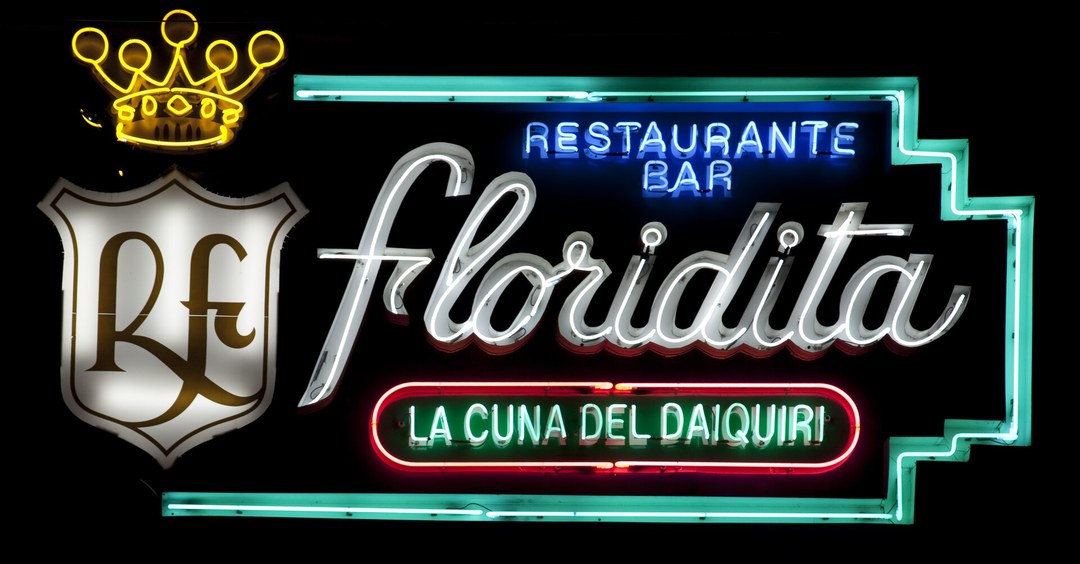
A bronze Hemingway now leans on the bar at his favorite stool. The sign out front calls the place "La Cuna del Daiquiri": the cradle of the daiquiri.
Sources & image credits
- Wikipedia: Daiquiri (Daiquirí beach and iron mine near Santiago de Cuba; Jennings Cox around 1898; Rear Adm. Lucius W. Johnson, Army and Navy Club, 1909; Ribalaigua Vert; Hemingway and JFK favorite; WWII-era popularity; Papa Doble recipe)
- Distiller: The Art of the Daiquiri (Cox recipe card at the University of Miami: juice of six lemons, six teaspoons sugar, six cups Bacardi Carta Blanca, two small cups mineral water, crushed ice; Johnson 1909; Fitzgerald 'This Side of Paradise' 1920; Papa Doble at La Floridita)
- PBS Food: Learn About the Hemingway Special (Constantino Ribalaigua Vert credited with frozen daiquiri; Hemingway no sugar, double rum = Papa Doble; grapefruit + maraschino = Hemingway Special; moved to Cuba 1939; bronze statue at his barstool)
- Library of Congress: Neon sign from the Floridita Bar, Havana, Cuba (Carol M. Highsmith, 2010)
Image attribution, source, license and modifications are shown in the caption above.
Facts checked November 17, 2026 at 1:15 PM MST.