
Fine Pens · Red Meat & Cigar Club editorial
Your First Fountain Pen
Start simple, then go deep.
A fountain pen changes how writing feels. Ink flows from a nib with almost no pressure, the line has character, and the pen itself can be a beautiful object you use for years. The good news: getting started doesn't cost much. Here's how to choose your first one and avoid the beginner frustrations.
How a fountain pen works
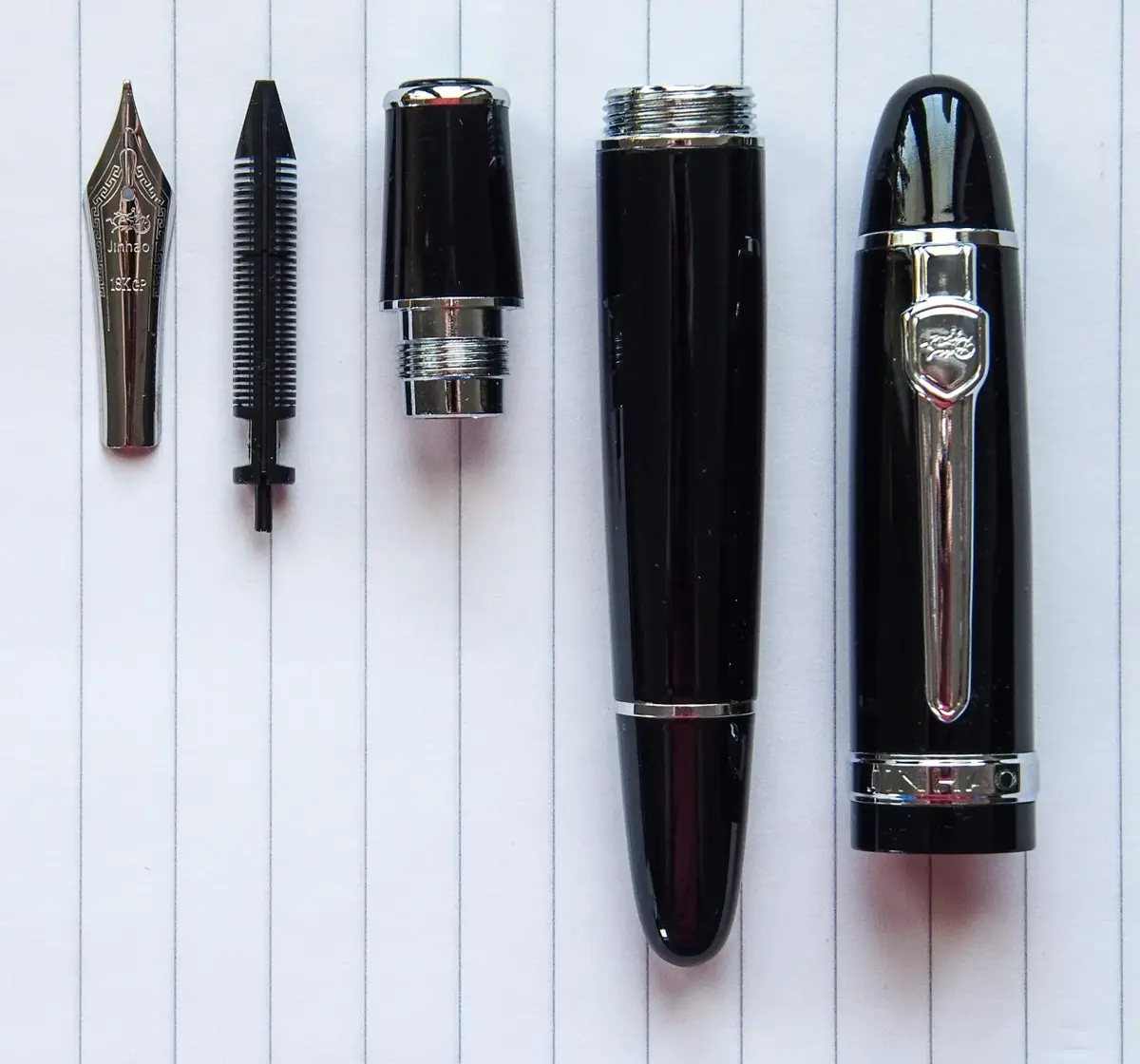
A fountain pen uses capillary action and gravity to move ink from a reservoir through a feed — a plastic or ebonite piece with fine channels — to the nib, the metal tip with a slit down the middle. Air enters through the feed to replace ink as it flows, which is why fountain pens write smoothly with very light pressure. A well-designed feed balances flow so the pen neither skips nor floods.
Start affordable
Many excellent fountain pens cost less than a nice dinner. Long-standing favorites with beginners include:
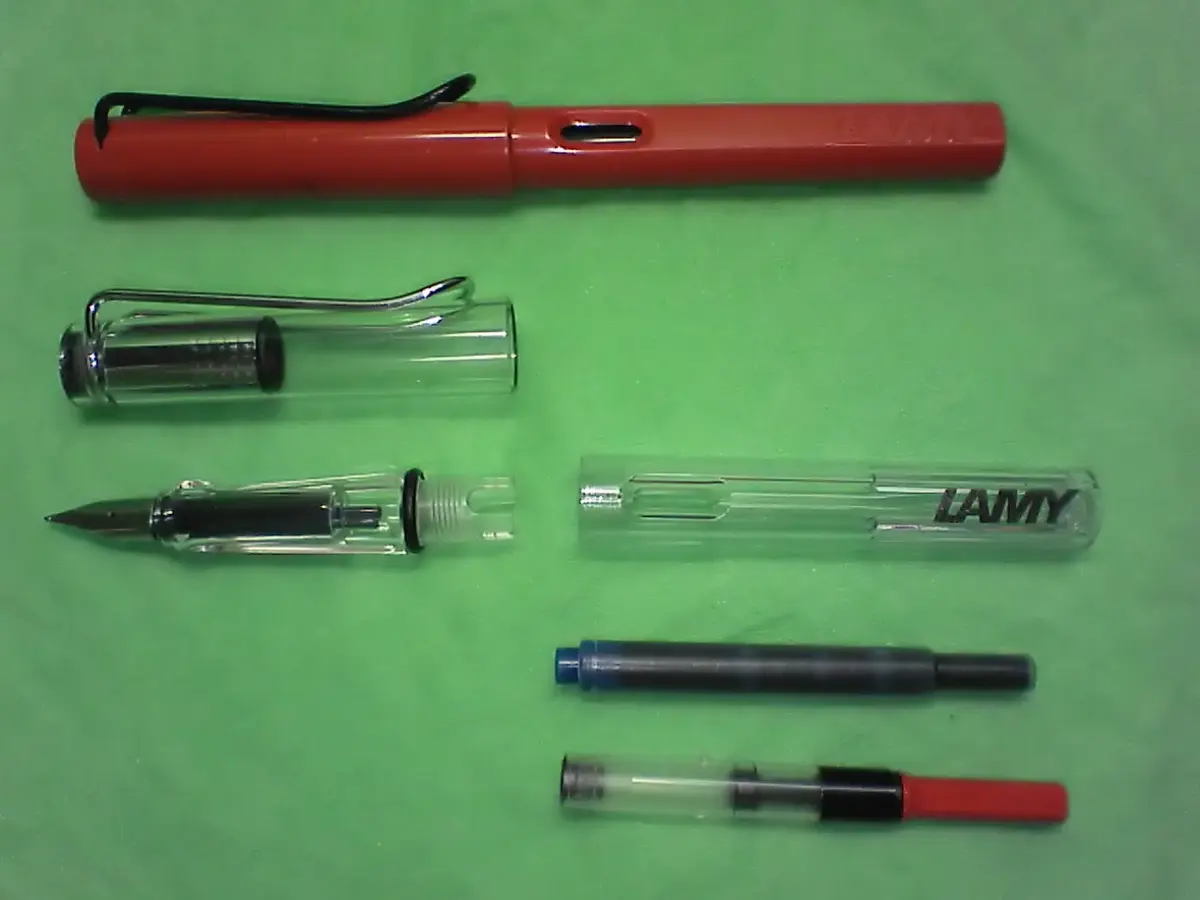
- Lamy Safari: introduced in 1980, a durable, triangular-grip pen with easily swappable steel nibs.
- Pilot Metropolitan: a metal-bodied pen known for a smooth, fine steel nib.
- Platinum Preppy and Pilot Kakuno: very inexpensive and surprisingly good.
- TWSBI Eco: a clear piston-filler that holds lots of ink and shows how the mechanism works.
Starting inexpensive lets you discover what you like — nib size, weight, grip shape, filling system — before spending serious money.
Nib size
Nibs come in extra-fine (EF), fine (F), medium (M), broad (B), and specialty grinds. For everyday writing, a fine or medium nib suits most people. Japanese nibs (Pilot, Platinum, Sailor) generally write finer than European nibs (Lamy, Pelikan, Montblanc) of the same label — a Japanese medium is often close to a European fine. Smaller handwriting and cheaper paper favor finer nibs.
Filling systems
- Cartridges: sealed ink tubes you pop in. Clean and convenient, but many brands use proprietary cartridges.
- Converters: small piston or squeeze reservoirs that replace a cartridge, letting you fill from bottled ink.
- Piston fillers: a built-in mechanism, usually operated by twisting the end of the barrel, that draws ink directly into the barrel. Holds more ink. Classic on pens like the Pelikan Souverän and Montblanc 149.
- Vacuum and eyedropper fillers: high capacity, more specialized.
Bottled ink is cheaper per milliliter and offers far more colors than cartridges.
How to write with one
- Hold it lightly. Let the pen's weight do the work. Pressing hard can spread the tines and damage the nib.
- Find the sweet spot. The nib writes best when the slit faces up and both tines touch the paper evenly. Most pens write best at around a 40- to 55-degree angle.
- Write with your arm rather than just your fingers, especially for longer passages.
Paper matters
Fountain pen ink can feather (spread into fuzzy lines) or bleed through cheap, absorbent paper. Smoother, coated papers from brands known for fountain-pen-friendly paper make a big difference. Many standard copy papers work fine with fine nibs.
Common beginner problems
- Hard starts: the nib dried out. Cap the pen when not writing.
- Skipping: could be dried ink, a misaligned nib, or oil from fingers on the nib. Flushing usually helps.
- Leaks on flights: pressure changes can push ink out. Carry pens full or empty, nib up.
Next steps
Once you know what you like, explore gold nibs, piston fillers, and the classic pens covered in our iconic pens guide, and learn about nibs and inks. Keep your pen running well with our care guide.
Pen gear (placeholder)
Placeholder — not live affiliate links
- [Pen retailer — placeholder]
- [Bottled ink — placeholder]
- [Leather pen case — placeholder]
Affiliate disclosure: Red Meat & Cigar Club may earn a commission from some links on this site at no extra cost to you. Learn more.