Grill / Barbecue · November 14, 2026 · RMCC 0193
Texas Smoked Brisket Explained: The Flat, the Point, the Stall and Why Low and Slow Works
Brisket is one of the toughest cuts on the steer. Here's where it comes from, the difference between the flat and the point, why it needs hours of low heat, and what 'the stall' really is.
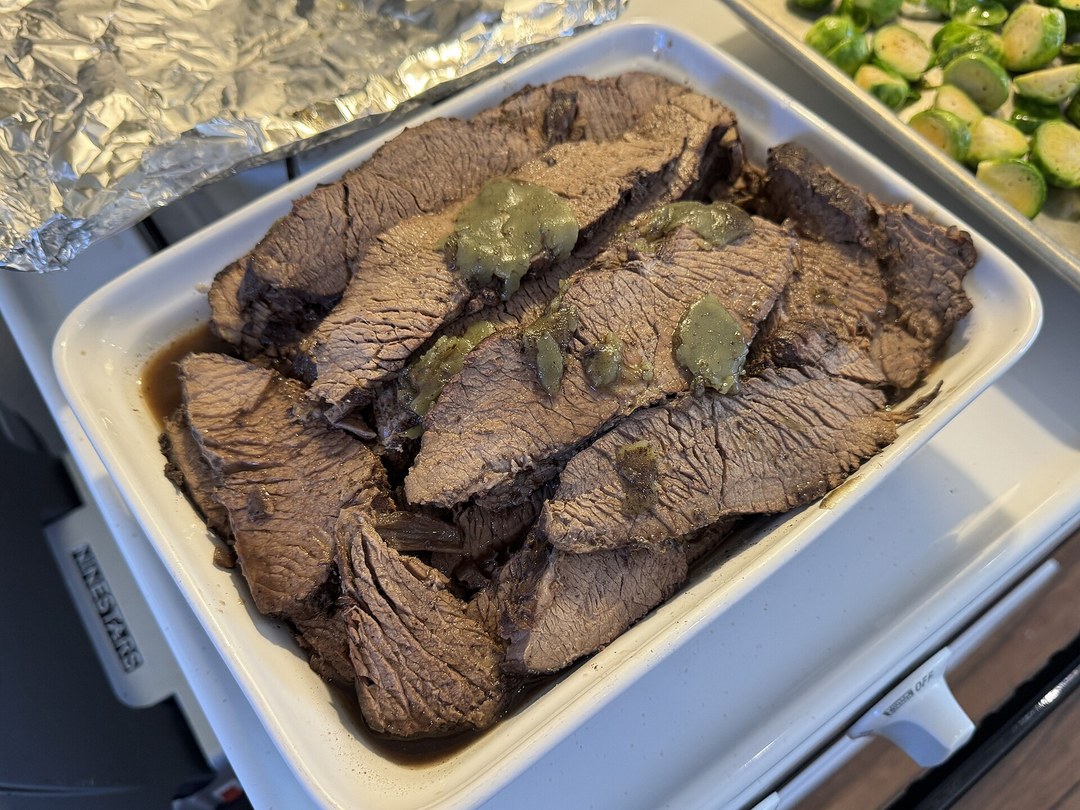
Brisket is one of the toughest cuts on the steer. Texas turned it into the main event anyway.
Where it comes from: the breast, or lower chest. Cattle don't have collarbones, so those chest muscles carry about 60% of the animal's weight. That means a lot of connective tissue, and meat that's tough as boot leather if you rush it.
A whole brisket is two muscles:
- The flat: leaner, and the classic sliced brisket.
- The point: fattier, and the source of burnt ends.
Why low and slow works: the connective tissue is collagen, and collagen turns into gelatin when it's cooked long enough. Meat scientists put that conversion at an internal temperature of about 185 to 195 degrees. Pull it early and it's tough. Give it time and it gets tender.
The stall: hours in, the temperature just stops climbing. That's evaporative cooling. Moisture on the surface is cooling the meat, the same way sweat cools you. Plenty of pitmasters wrap in butcher paper to push through it.
When is it done? When it's probe tender, meaning a probe slides into the flat like it's going into butter. That often happens right around 203 degrees.
A little history: Jewish, Czech and German immigrants brought brisket to Texas in the late 1800s. Smoked brisket was on Jewish deli counters across the state by the early 1900s, and by the 1960s most Texas barbecue joints had it.
Flat or point? Sauce or no sauce? Make your case below.
Sources & image credits
- Wikipedia: Brisket (breast/lower chest; no collarbones, ~60% of body weight; flat = deep pectoral, point = superficial pectoral; IMPS 120)
- Texas A&M Meat Science: Barbecue Science (collagen to gelatin at 185-195 F internal; plateau = evaporative cooling)
- AmazingRibs: What causes the barbecue stall (evaporative cooling; ~150-170 F plateau)
- Barbecuebible.com: To wrap or not to wrap (butcher paper)
- Pit Physics: The science of competition brisket (probe tender, ~203 F)
- Wikipedia: Texas smoked brisket (Jewish, Czech, German immigrants late 1800s; Jewish delis early 1900s; most Texas BBQ restaurants adopted brisket in the 1960s)
Image attribution, source, license and modifications are shown in the caption above.
Facts checked November 14, 2026 at 8:19 AM MST.