
Steaks · November 12, 2026 · RMCC 0178
The Ribeye Explained: Why the Steak Lover's Steak Comes From the Rib Primal
The ribeye comes from the rib primal, ribs six through twelve, and packs three muscles and heavy marbling into one steak. Here's what's in it and what it's called around the world.
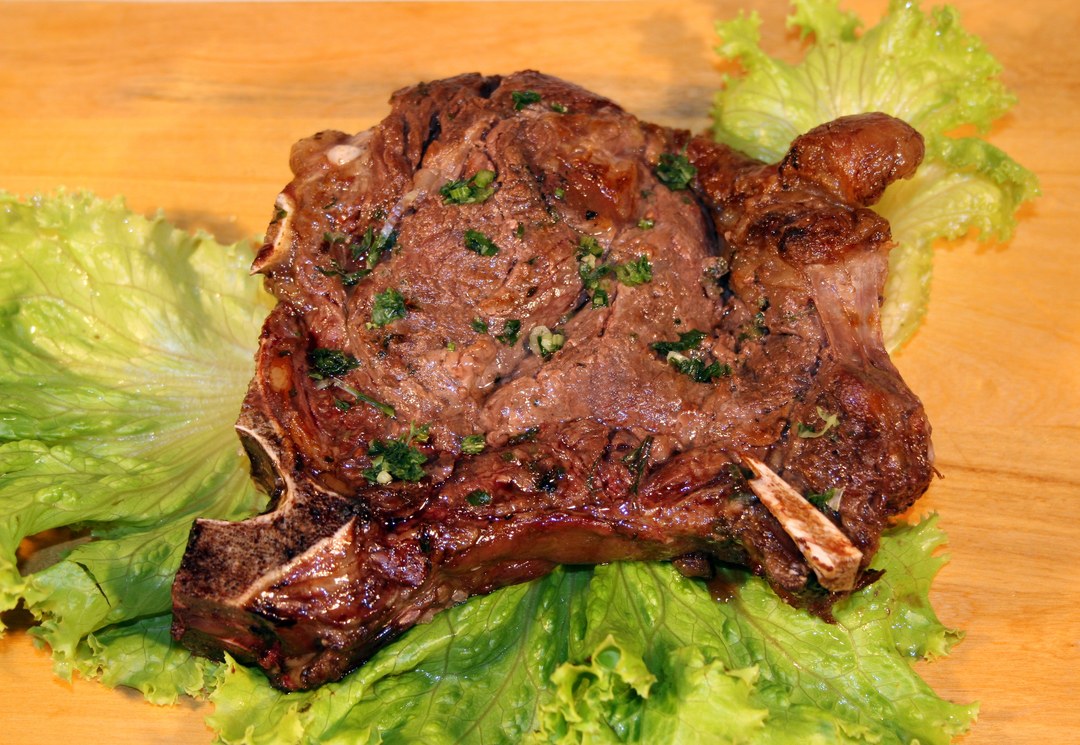
If you only grill one steak the rest of your life, a lot of us would pick this one.
The ribeye comes from the rib primal, which covers ribs six through twelve along the back. It sits right between the chuck and the loin. Butchers call this area the "middle meats."
That location is the whole secret. The shoulder muscles in the chuck work hard, so they're tough. The loin muscles barely work, so they're tender. The rib lands in between. You get tenderness and big beef flavor in the same bite.
A full ribeye steak is really three muscles:
- The eye (longissimus dorsi): the big round center
- The cap (spinalis dorsi): the curved strip on the outside, and the best bite on the plate
- The complexus: a small side muscle that isn't always there
Then there's the marbling. This part of the animal naturally carries a lot of it. Those white streaks melt on the grill and baste the steak from the inside.
Same steak, lots of names:
- Prime rib: the same cut, roasted on the bone
- Delmonico, or Spencer steak on the West Coast
- Scotch fillet in Australia and New Zealand
- Entrecôte in France, ojo de bife in Argentina
Leave five-plus inches of bone on, and you've got a tomahawk. Oklahoma even made the ribeye its official state steak in 2019.
Bone-in or boneless? Tell us how you grill yours.
Sources & image credits
- Snake River Farms: The Cut, Ribeye (rib primal covers ribs six through twelve between chuck and loin; middle meats; longissimus dorsi, complexus, spinalis dorsi/cap; high natural marbling)
- Wikipedia: Rib eye steak (same cut as prime rib without the bone; Delmonico, Spencer/market steak on West Coast, Scotch fillet, entrecote, ojo de bife; tomahawk with 5+ inches of bone; Oklahoma state steak 2019)
Image attribution, source, license and modifications are shown in the caption above.
Facts checked November 12, 2026 at 6:42 PM MST.