Grill / Steak Cuts · November 10, 2026 · RMCC 0155
Filet Mignon Explained: The Steak From the Muscle That Does Almost Nothing
Filet mignon comes from the small end of the beef tenderloin, a muscle along the spine that barely works. That's why it's so tender, so lean and so expensive.
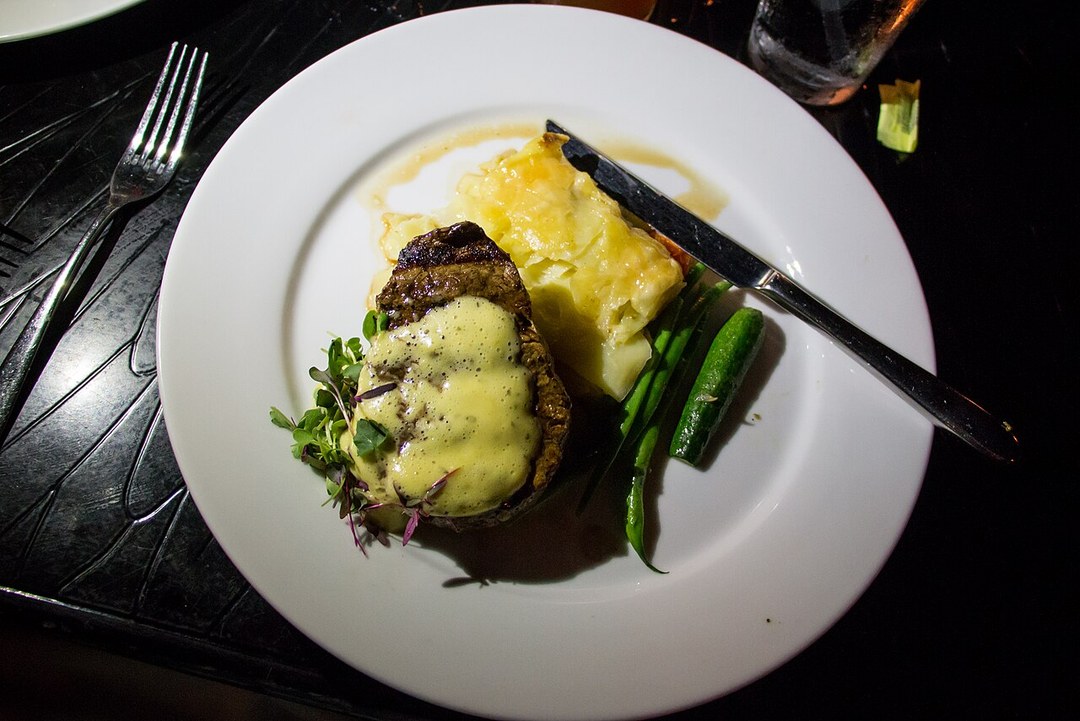
Every steakhouse menu has one. Here's where it comes from.
Filet mignon comes from the tenderloin, the psoas major. It's a long, narrow muscle that runs along both sides of the spine, tucked under the ribs.
The secret is that it barely works. Less work means less connective tissue, and that's why the filet is the most tender steak on the animal.
Strictly speaking, filet mignon is cut from the smaller end of the tenderloin. In practice, most American butchers and restaurants sell the center and the big end under the same name.
Same muscle, plenty of names:
- The big center piece is the chateaubriand.
- Small rounds from the tail are tournedos.
- In the U.K. it's a fillet steak. In Australia and New Zealand it's an eye fillet.
- In France, "filet mignon" usually means pork. The beef cut is filet de boeuf.
You've already eaten one if you've had a porterhouse or a T-bone. The small medallion on one side of the bone is the filet. The long piece on the other side is the strip.
It's lean, so it's milder than a ribeye. That's why you'll see it wrapped in bacon or topped with bearnaise. Each animal yields only a small amount, which is why it costs what it does.
Filet with bearnaise, wrapped in bacon, or give me the ribeye?
Sources & image credits
- Wikipedia: Filet mignon (small end of the tenderloin, psoas major; names in other countries; porterhouse/T-bone)
- Wikipedia: Beef tenderloin (muscle does very little work; butt, center cut, tail; chateaubriand, tournedos)
Image attribution, source, license and modifications are shown in the caption above.
Facts checked November 10, 2026 at 8:12 AM MST.