
Fishing / Fly Fishing · November 12, 2026 · RMCC 0169
The Woolly Bugger: How a 1967 Pennsylvania Fly Became the One Streamer Every Angler Carries
A Pennsylvania tier added a marabou tail to an old pattern in 1967, and the Woolly Bugger became one of the most dependable flies in fly fishing. Here's the history and how to fish it.
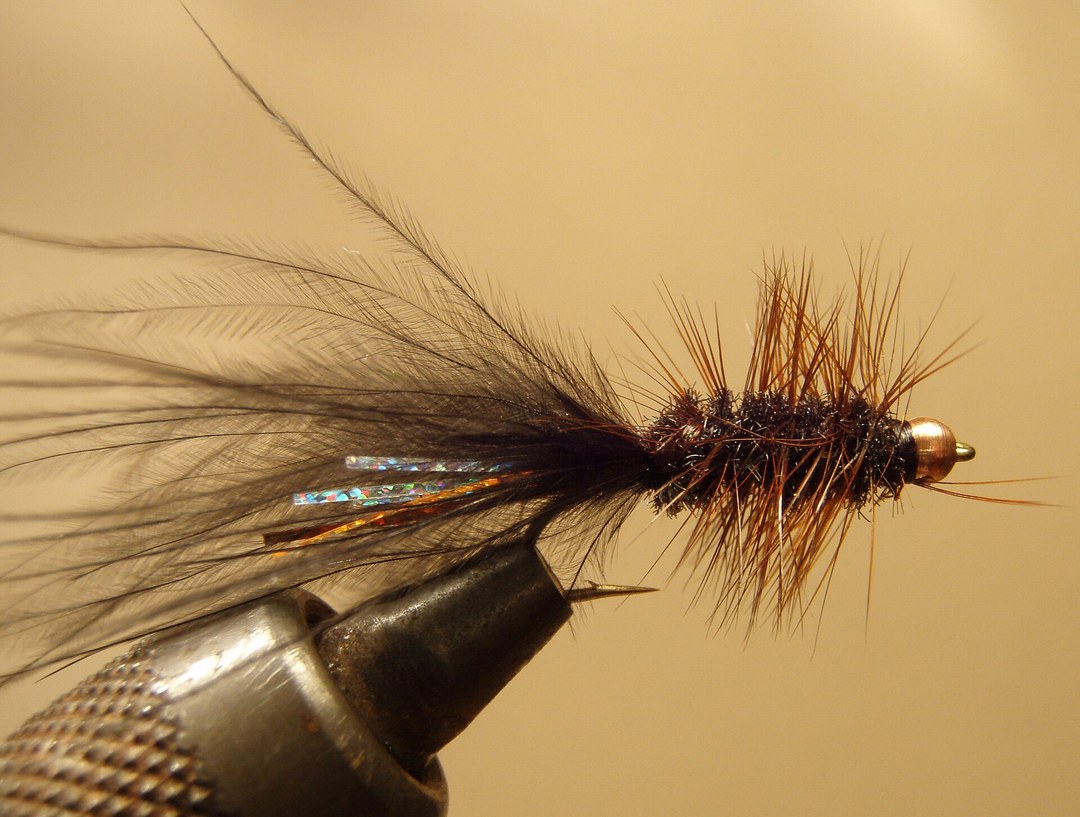
Every fly box has one. Most have a dozen.
The Woolly Bugger goes back to 1967 and a Pennsylvania angler named Russ Blessing. He wanted something that looked like a hellgrammite, the big, nasty larva of the dobsonfly, for the smallmouth and trout in his local water.
So he took an old pattern called the Woolly Worm and added a marabou tail. That tail breathes and waves with the slightest movement, and it changed everything. An original Blessing Bugger is on display at the Pennsylvania Fly Fishing Museum.
What it's made of:
- Marabou tail
- Chenille body
- Hackle wrapped the length of the body
- Fine wire rib to keep fish teeth from shredding the hackle
Why it works: it doesn't imitate one thing. Depending on size, color and how you move it, a trout can take it for a leech, a baitfish, a big nymph, a sculpin or a crayfish.
Olive, brown and black are the go-to colors. Add a bead or cone head to get it down fast in deep runs.
How to fish it? Blessing's own advice was to dead-drift it first, then try jigging, swinging and stripping. His summary: "Almost everything works, some of the time."
On a cold tailwater in winter, start slow and let it tumble near the bottom before you go to fast strips.
What color Bugger has caught you the most fish?
Sources & image credits
- MidCurrent: Russ Blessing, inventor of the Woolly Bugger, dies (1967; Lancaster, Pa.; marabou tail on a Woolly Worm to imitate a hellgrammite; 'Almost everything works, some of the time.')
- Fly Fisherman: A Classic Reimagined, why the Woolly Bugger still catches fish (Blessing 1935-2009; trout and smallmouth ate hellgrammites and crayfish; shared 1967; original at the Pennsylvania Fly Fishing Museum)
- Wikipedia: Woolly Bugger (materials, wire rib, what it imitates, colors, bead/cone variations)
Image attribution, source, license and modifications are shown in the caption above.
Facts checked November 12, 2026 at 8:20 AM MST.