Cars · November 12, 2026 · RMCC 0175
The Elephant: How the 426 Hemi Won Daytona, Got Banned, and Came Back for the Street
Chrysler built the 426 Hemi to win the 1964 Daytona 500. It did, NASCAR banned it, and Chrysler answered with the 425-horsepower 426 Street Hemi in 1966.
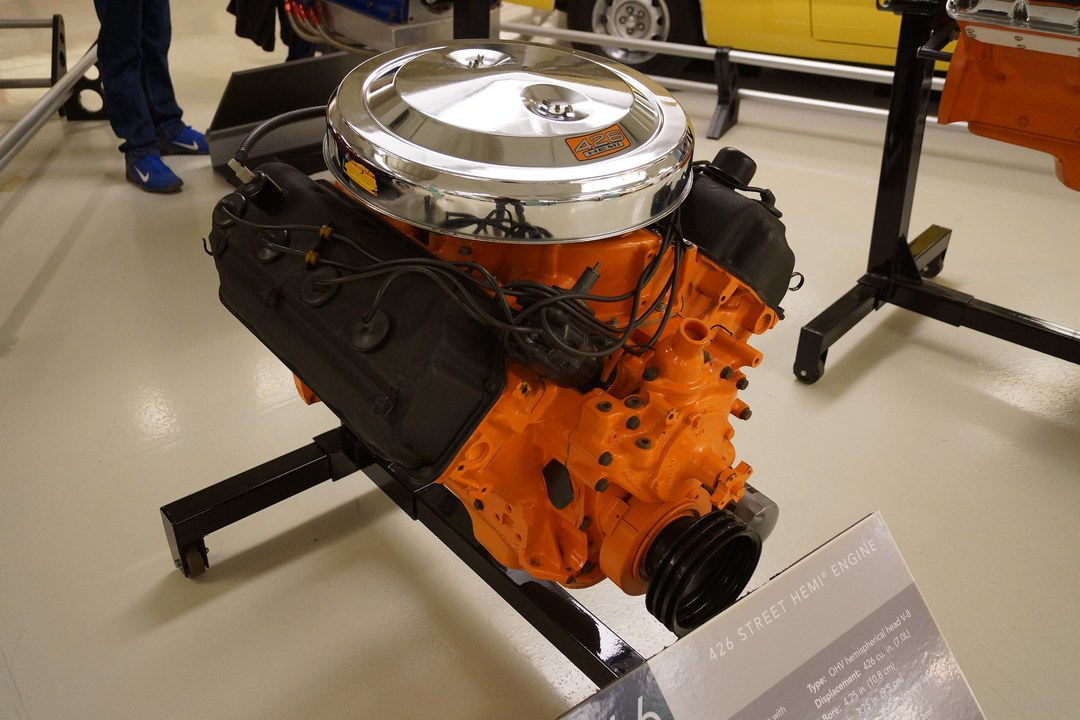
Some engines have numbers. This one has a nickname: the Elephant.
Chrysler's 426 Hemi was built for one job. In April 1963, a small team of engineers set out to win the Daytona 500 in February 1964. They made it.
Richard Petty drove his No. 43 Plymouth to the win on Feb. 23, 1964. Plymouths finished first, second and third. Petty went on to win the championship.
Then NASCAR banned it.
For 1965, NASCAR ruled the Hemi wasn't a real production engine. Chrysler pulled out in protest, then came back midseason after a compromise. Its answer was to put the Hemi in showrooms.
THE 1966 STREET HEMI
- 426 cubic inches
- Two Carter four-barrel carbs
- Rated at 425 horsepower and 490 lb-ft of torque
- Optional on midsize Dodges and Plymouths, for roughly $600 to $900 extra
Magazines ran them through the high 13s to low 14s in the quarter mile, right off the showroom floor.
It didn't last. Insurance costs and emissions rules killed the Street Hemi after the 1971 model year. These days, factory Hemi cars like the 'Cuda, Charger and Road Runner are some of the most collectible muscle cars around.
Chrysler brought the Hemi name back in 2003, and it eventually powered 797-horsepower Hellcats.
Which Hemi car would you put in your garage?
Sources & image credits
Image attribution, source, license and modifications are shown in the caption above.
Facts checked November 12, 2026 at 8:20 AM MST.