
Watches · Red Meat & Cigar Club editorial
Chronographs & Pilot Watches
Stopwatches and cockpit legibility.
Some of the most famous watches in the world were built as tools for people who fly and race. Chronographs and pilot watches share a heritage of speed, precision, and legibility — and a few of them have been to space.
What a chronograph is
A chronograph is a watch with a built-in stopwatch. Typically, a pusher at 2 o'clock starts and stops timing, and one at 4 o'clock resets. A central seconds hand counts elapsed seconds, while small sub-dials ("registers") count minutes and hours. Many chronographs have a tachymeter scale on the bezel or dial to calculate speed over a known distance: start timing at a mile marker, stop at the next, and read your speed in miles per hour.
Chronograph movements are more complex than simple three-hand movements. Key terms you'll hear include column wheel (a traditional, often prized mechanism for controlling chronograph functions) vs. cam actuation, and vertical vs. horizontal clutch. A flyback chronograph can reset and restart with a single push — useful for pilots timing successive legs.
Racing icons
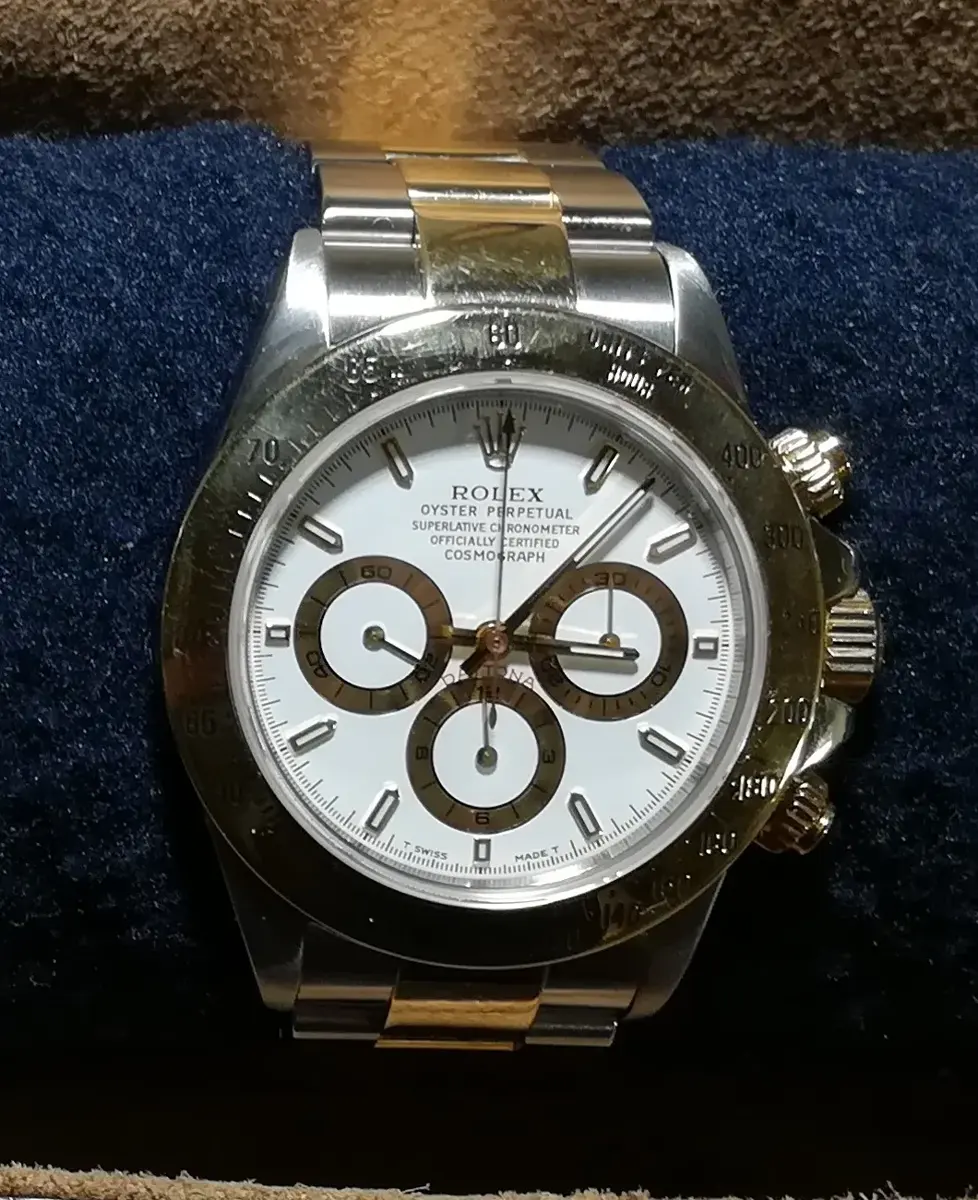
The Rolex Cosmograph Daytona, introduced in 1963 and named for the Florida racetrack, is perhaps the most famous chronograph. The TAG Heuer Monaco, with its square case, debuted in 1969 and became famous after Steve McQueen wore one in the film Le Mans. Heuer's Carrera was named after the Carrera Panamericana road race.
The Moonwatch
The Omega Speedmaster was introduced in 1957 as a sports and racing chronograph. NASA tested several chronographs to destruction in 1964 and 1965 — heat, cold, vacuum, shock, humidity, vibration — and qualified the Speedmaster for spaceflight on March 1, 1965. Buzz Aldrin wore his on the Moon during Apollo 11 in 1969. During Apollo 13, astronauts used a Speedmaster to time a critical engine burn. See our Speedmaster entry.
Pilot watches
Pilot watches grew from early aviation, when pilots needed timing for navigation. Louis Cartier designed the Santos for aviator Alberto Santos-Dumont in the early 1900s, one of the first wristwatches designed for men. Common pilot watch features include:
- Large, highly legible dials with luminous hands and numerals.
- Oversized crowns that can be operated with gloves.
- Triangle markers at 12 o'clock for orientation.
- Flieger style: the German "B-Uhr" observation watches of WWII, with very large cases and stark dials, still inspire many designs.
The Navitimer and slide rules
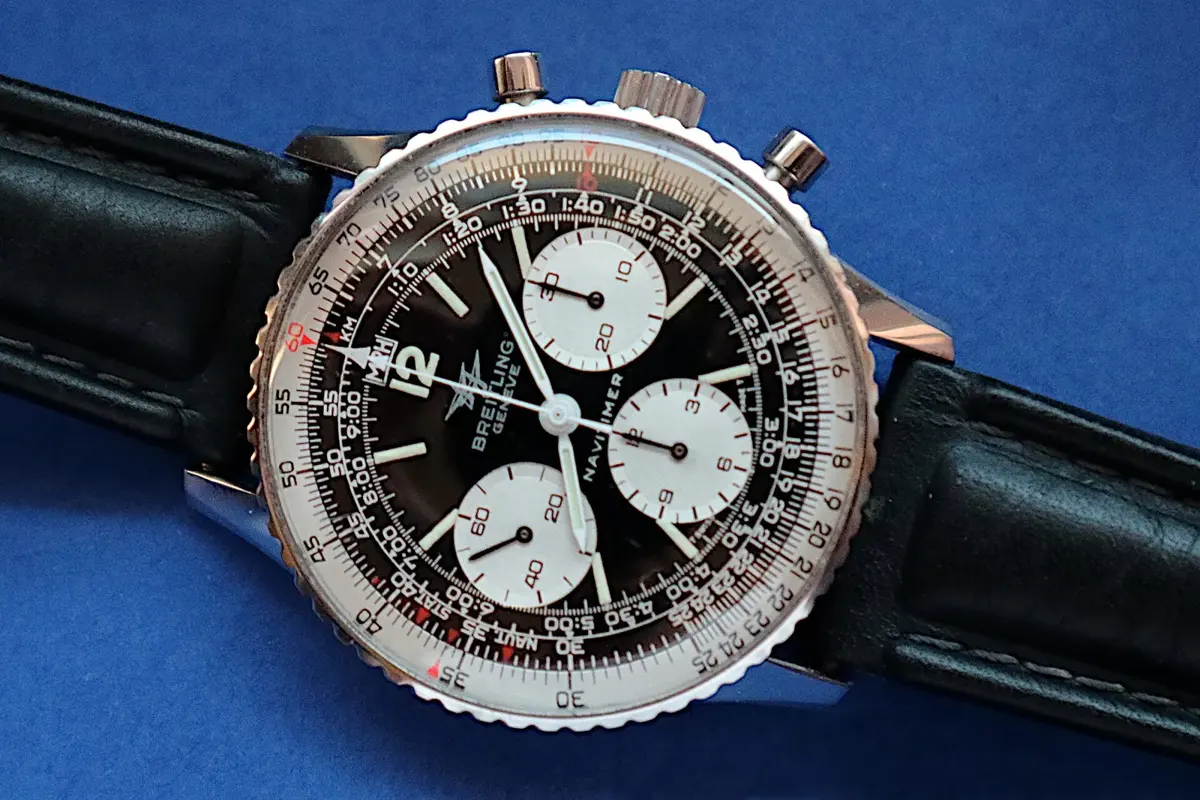
The Breitling Navitimer appeared in 1952, developed for the Aircraft Owners and Pilots Association (AOPA). Its circular slide-rule bezel lets pilots calculate airspeed, fuel consumption, rate of climb, and distance — a "flight computer" on the wrist. In 1962, astronaut Scott Carpenter wore a custom 24-hour Navitimer on his Mercury orbital flight. See our Navitimer entry.
GMT watches
Pilots crossing time zones needed to track two times at once. The Rolex GMT-Master, introduced in the 1950s and associated with Pan Am crews, added a 24-hour hand and rotating 24-hour bezel. Today GMT functions are common across many brands.
Do pilots still use them?
Modern cockpits have precise digital clocks and timers, so pilot watches are now mostly about heritage and style. But a chronograph is still genuinely useful for timing anything — a steak on the grill, a parking meter, or a lap at a track day.
Watch gear (placeholder)
Placeholder — not live affiliate links
- [Watch roll / case — placeholder]
- [Watch winder — placeholder]
- [Authorized dealer / pre-owned retailer — placeholder]
Affiliate disclosure: Red Meat & Cigar Club may earn a commission from some links on this site at no extra cost to you. Learn more.