Classic Car Reviews · Profile & review in progress
1965 Ford Mustang
The first-generation pony car that created a segment.
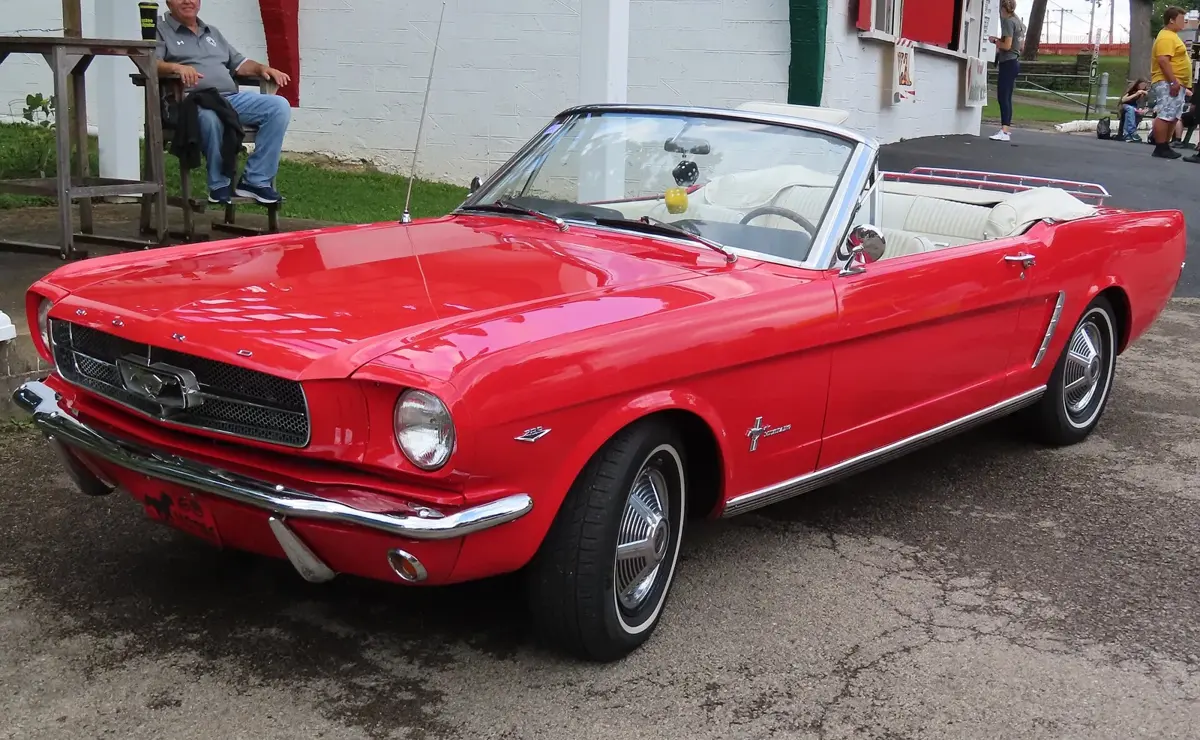
Few cars have changed the auto industry like the original Ford Mustang. It created a new segment, sold in staggering numbers, and became an American cultural icon that's still in production six decades later. Here's the background ahead of our review.
Launch
The Mustang was unveiled on April 17, 1964, at the New York World's Fair, and it went on sale the same day. Because it arrived before the usual fall model-year introduction, early cars are often called "1964½" models by enthusiasts, though Ford titled them as 1965 models. Ford's advertising push was enormous, including simultaneous appearances on all three major TV networks and the cover of both Time and Newsweek.
The car was championed by Ford executive Lee Iacocca, with a design team including Joe Oros, L. David Ash, and Gale Halderman. To keep costs down, it was built on the platform of the compact Ford Falcon, sharing many components.
The formula
The Mustang combined sporty styling — long hood, short rear deck — with a low base price of $2,368, according to Ford. The real genius was the options list: buyers could configure anything from an economical six-cylinder commuter to a V8-powered performance car with luxury trim. That flexibility appealed to a huge range of buyers.
Sales
Demand was extraordinary. Ford reported about 22,000 orders on the first day. The company sold more than 400,000 Mustangs in the first 12 months, and the one-millionth Mustang was built in early 1966. The car's success led directly to the term "pony car" and prompted competitors including the Chevrolet Camaro, Pontiac Firebird, Plymouth Barracuda, and Dodge Challenger.
Body styles and engines
- Body styles: hardtop coupe and convertible at launch; a 2+2 fastback followed for the 1965 model year.
- Engines (1965 model year): six-cylinder engines (170 cu in in early cars, then 200 cu in), and V8s including the 260 cu in in early cars and the 289 cu in in several versions, topped by the high-performance "K-code" 289, rated at 271 horsepower.
- GT package: introduced during the 1965 model year with features including front disc brakes, upgraded suspension, and fog lamps in the grille.
The Shelby connection
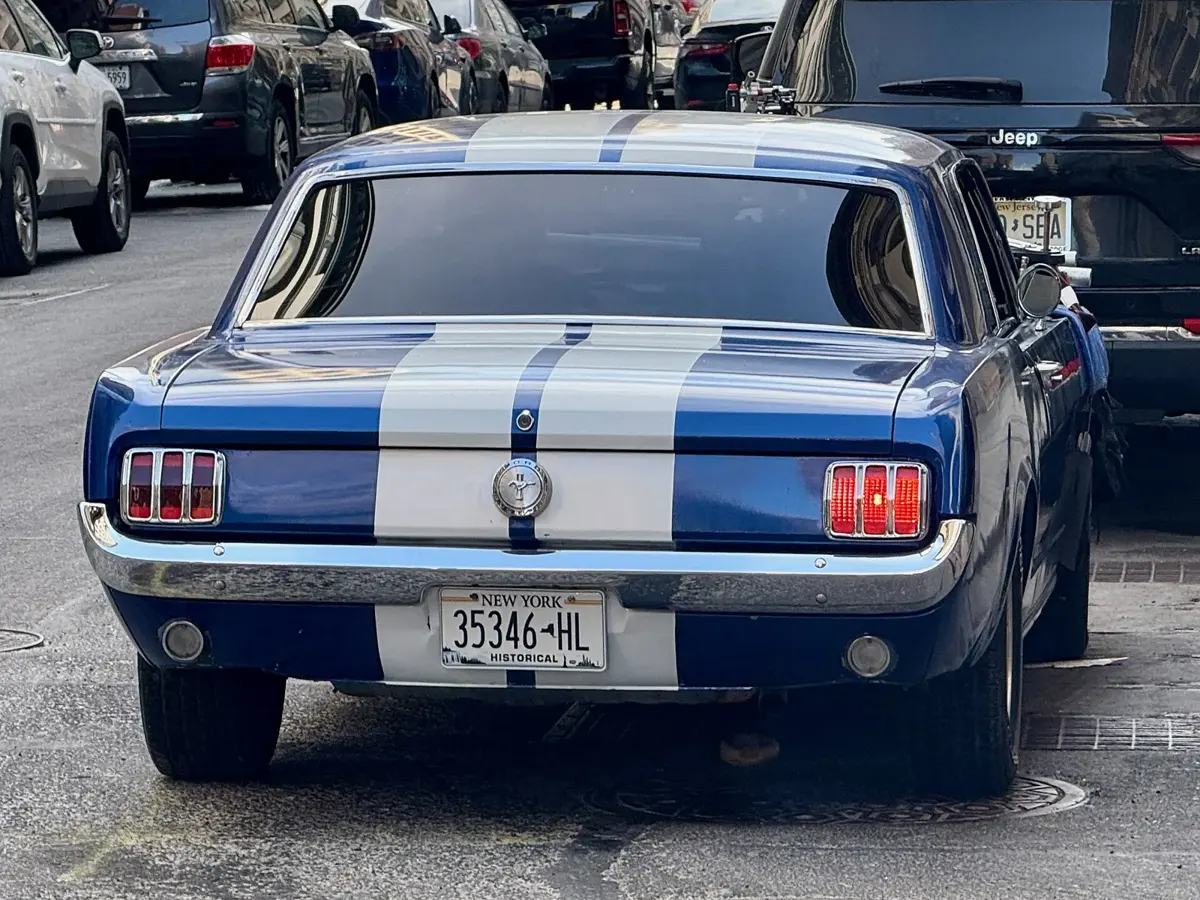
Carroll Shelby's operation in California turned fastbacks into the Shelby GT350 for 1965, a lightweight, track-focused car built for racing homologation. Shelby Mustangs are among the most valuable Mustangs today.
What we'll evaluate
- Design: styling, proportions, interior.
- Driving character: how it drives by modern standards, depending on configuration.
- Ownership and parts: parts availability, maintenance, community support.
- Collectibility: market interest and what drives values.
Buying considerations
- Decode the VIN and data plate. The fifth character of the VIN indicates the engine code (for example, "K" for the high-performance 289). Verify against the car.
- Rust: check floor pans, torque boxes, cowl vents (a known trouble spot that can leak into the footwells), rear frame rails, and lower quarters.
- Parts: reproduction parts are widely available, making restoration and maintenance easier than for many classics.
- Clones: GT and Shelby tributes are common; verify documentation for any claimed special model.
See our guide to buying your first classic.
Status
No ratings have been assigned. We'll score the car after the hosts have spent time behind the wheel.
Driving one today
A first-generation Mustang's driving experience varies widely by configuration. A six-cylinder automatic car is a gentle cruiser; a K-code GT with a four-speed is a different animal. Many owners upgrade brakes, suspension, and steering for modern traffic. Reproduction and upgrade parts are plentiful.
Ratings
Ratings are editorial opinions and will be added once the hosts have spent time with this car. No scores have been assigned yet.
The verdict
Coming soon.
Where to find it (placeholder)
Placeholder — not live affiliate links
- [Retailer / dealer placeholder]
Affiliate disclosure: Red Meat & Cigar Club may earn a commission from some links on this site at no extra cost to you. Learn more.