
Classic Car Reviews · Profile & review in progress
1963 Chevrolet Corvette Sting Ray (C2)
Known for the one-year split rear window coupe.
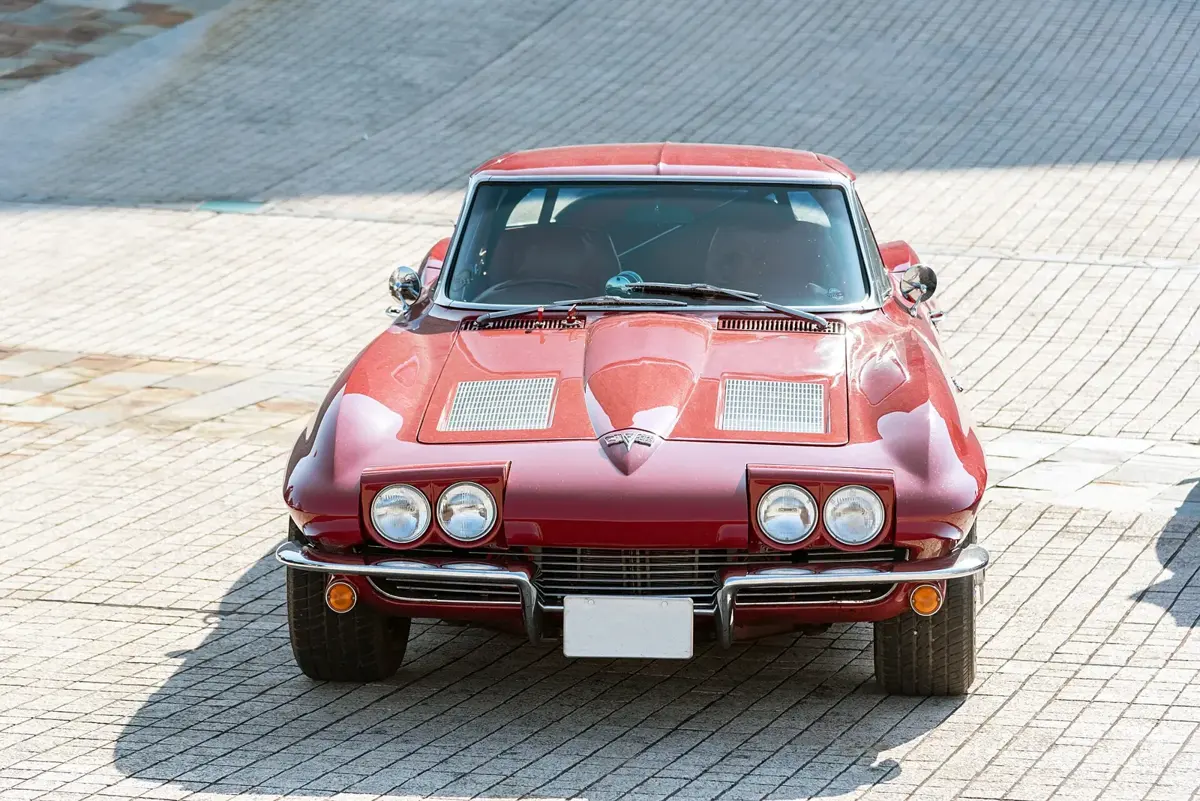
The 1963 Corvette Sting Ray is one of the most beautiful American cars ever built, and its one-year-only split rear window has made it a collector legend. Here's the background ahead of our review.
A new generation
The Corvette debuted in 1953 as a fiberglass-bodied roadster. For 1963, Chevrolet introduced the second generation, known as the C2, with a dramatic new body and a new name: Sting Ray. It was the first Corvette offered as a coupe in addition to the convertible.
The design came from General Motors styling under Bill Mitchell, with designer Larry Shinoda among the key contributors. It drew on Mitchell's Stingray racer, a late-1950s race car built on the chassis of the Corvette SS project, and on influences that included marine life. Chief engineer Zora Arkus-Duntov, often called the "father of the Corvette," led engineering improvements.
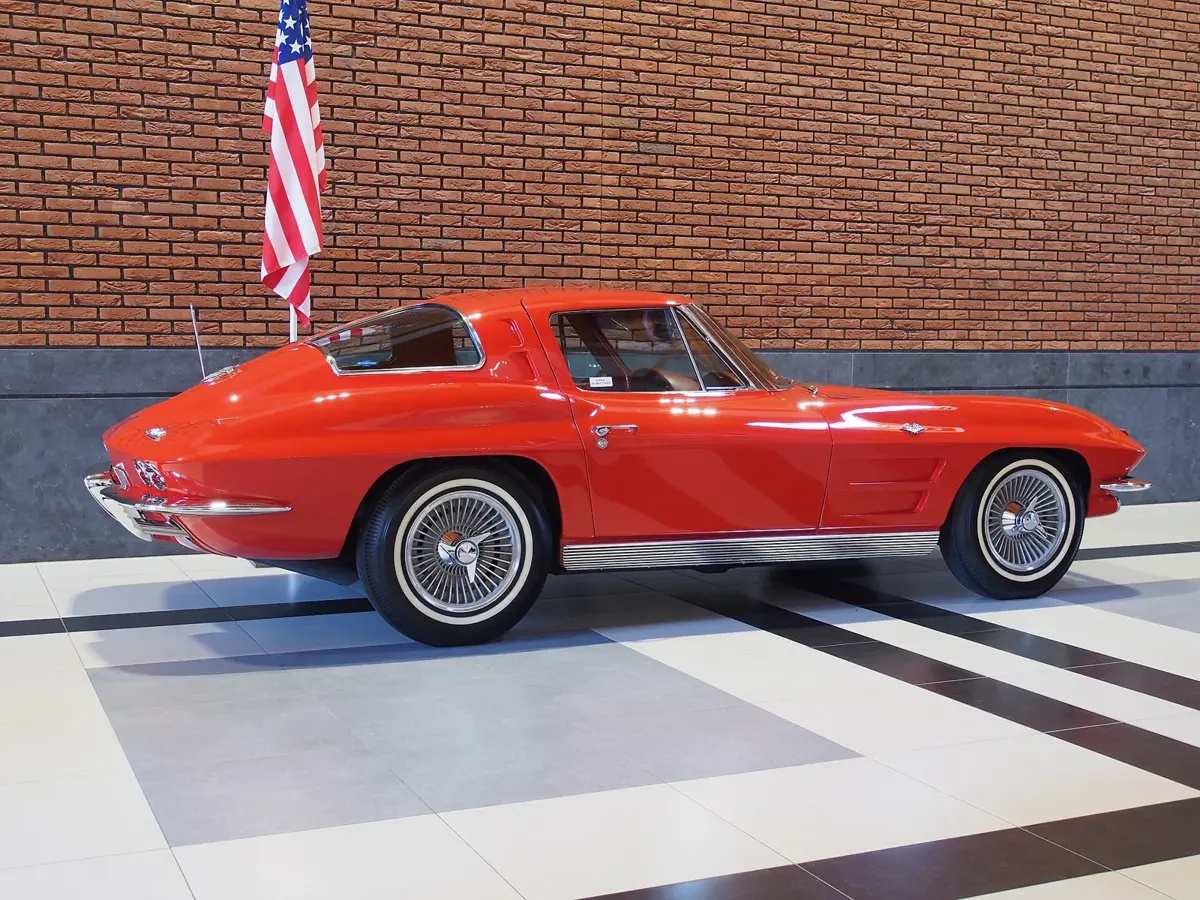
The split window
The 1963 coupe's rear window was divided by a spine running down the center of the roof — a styling feature Mitchell championed. Duntov reportedly objected because it hurt rearward visibility. Chevrolet replaced it with a single rear window for 1964, making the 1963 split-window coupe a one-year design. Some owners of '63s later replaced the split windows with single-pane conversions, which makes original split-window cars more prized today.
Engineering
- Independent rear suspension: the C2 was the first Corvette with independent rear suspension, using a transverse leaf spring, improving ride and handling.
- Chassis: a new ladder frame with a shorter wheelbase than the C1.
- Hidden headlamps: rotating pop-up headlights.
- Engines: the 1963 Sting Ray used the 327 cubic-inch small-block V8 in four versions, from 250 to 360 horsepower (gross), the top rating coming from the "fuelie" with Rochester mechanical fuel injection.
- Transmissions: three-speed manual, four-speed manual, or two-speed Powerglide automatic.
Production
Chevrolet built just over 21,500 Corvettes for 1963, split nearly evenly between coupes and convertibles — roughly 10,600 coupes and 10,900 convertibles, according to commonly cited production figures. Demand was strong enough that buyers faced waiting lists.
Special versions
Chevrolet built a handful of lightweight Z06 racing-package cars for 1963, and the even rarer Grand Sport racers, of which only five were built before GM's racing ban halted the program. Big-block 396 and 427 engines arrived in 1965 and 1966, and four-wheel disc brakes became standard in 1965.
What we'll evaluate
- Design: styling, interior, details.
- Driving character: performance and handling by modern standards.
- Ownership and parts: availability, mechanics, and community.
- Collectibility: market interest.
Buying considerations
- Frame and "birdcage": fiberglass doesn't rust, but the steel frame and the steel structure around the cabin (the birdcage) can. Inspect carefully.
- Originality: engine stamping, trim tags, and documentation matter greatly; fuel-injected and Z06 cars are frequently faked.
- Judging organizations: the National Corvette Restorers Society (NCRS) and Bloomington Gold provide judging and certification that many buyers rely on.
- Window conversions: verify that a split window is original.
Status
No ratings have been assigned. We'll score the car after the hosts have driven one.
Driving a C2 today
Compared with modern cars, a C2 has heavier unassisted steering on many examples, drum brakes on 1963-64 cars, and fewer safety features. Many owners make sympathetic upgrades such as improved brakes and radial tires, while others keep cars strictly original for judging. Which path is right depends on how you'll use the car.
Ratings
Ratings are editorial opinions and will be added once the hosts have spent time with this car. No scores have been assigned yet.
The verdict
Coming soon.
Where to find it (placeholder)
Placeholder — not live affiliate links
- [Retailer / dealer placeholder]
Affiliate disclosure: Red Meat & Cigar Club may earn a commission from some links on this site at no extra cost to you. Learn more.